15 July, 2013

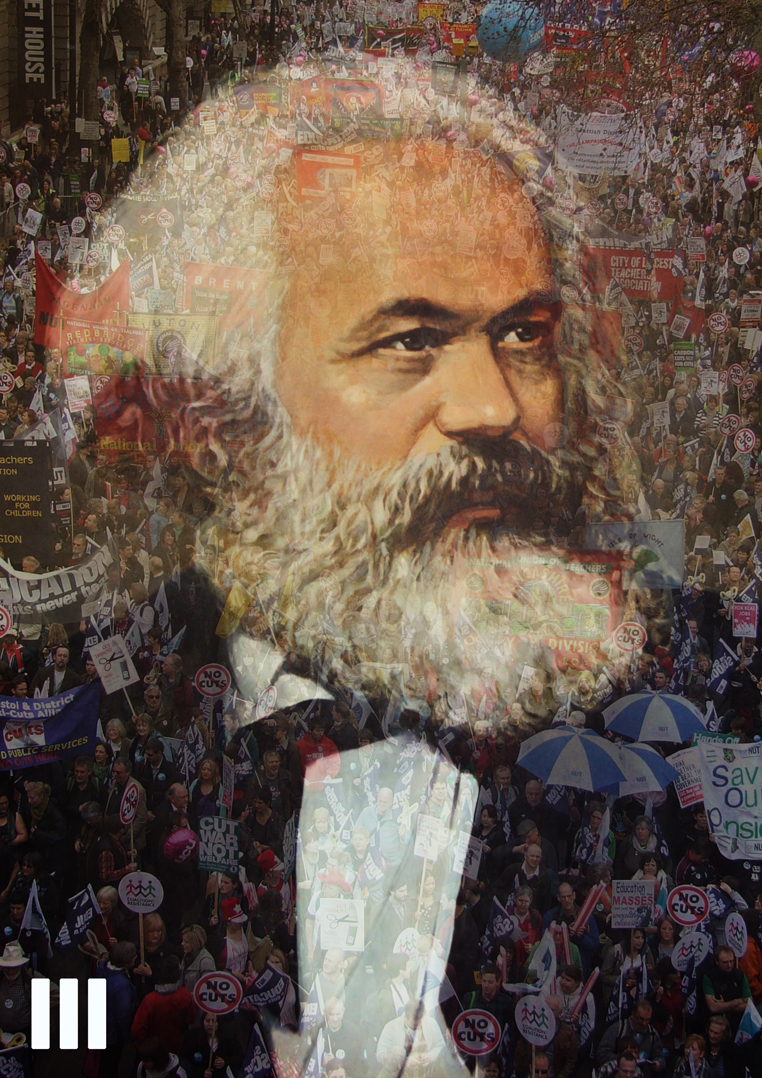
New Special Issue: Marxism III - Why Socialism?


The set of papers in this new Special Issue were originally published here on the Shape Blog under the title the Why Socialism? series. It was written as a multi-part introduction to the topic and became a very popular series vastly increasing its visitor numbers over many months.

Clearly many questions were still needing answers, for in spite of a long and illustrious history since the original publication of the Communist Manifesto by Marx and Engels in 1848, Socialism has accrued countless failures and even betrayals. Yet its central tenets are as true today as when they were first written down in that document, well over 150 years ago.

The position was not like that of the Utopian Socialists, but was based upon a materialist philosophic standpoint - a meeting of German philosophy, English political economics and French social history. It was, and is, a magnificent amalgam, founded upon the necessary processes of social revolution, to finally dismantle old class regimes and liberate the masses.

Yet, only in a few places was this possible, where the working class was in a position to carry through a revolution by itself. In most cases the only possible route to a successful uprising was via an alliance of classes, including both the peasantry and often a large slice of the as-yet unliberated middle class. The problem was always what would happen once the repressive regime had been vanquished. Could the task of establishing Socialism be straightforward, or would the classes of this revolutionary alliance break apart and begin to work for their own dominance? The answer to such questions has been produced time and again by history, in Russia, Germany, China and right up to the present day with the avalanche of revolutions precipitated by the Arab Spring.

Socialism grounded in solid Marxist theory is needed now more than ever, as Capitalism faulters and people across the globe take to the streets in their millions.

Let this collection of essays on Democracy, Economics and Revolution, by a life-long Marxist, help with the problems of this, the most widespread unrest since the Europe-wide Year of Revolutions in 1848.


02 July, 2013

Earth Before Life


A Lifeless Planet

Let us imagine a totally lifeless world!

Let us place it exactly where the Earth is now, in a containing situation very similar to that which pertains there today – but without either a single living thing of any kind present, nor anything that would have been made by Life.

What then would we have?

Starting with the nature of the substance of that planet and how it was originally constructed, it would certainly be hot! Indeed, having aggregated via millions of collisions with other solid bodies, both large and small, arriving at cosmic (very large) speeds, and arriving literally incessantly over a very long period – indeed, hundreds of thousands, if not millions, of years, it would certainly have been transformed to contain truly vast amounts of energy, which as it grew in size, would find it ever harder to escape as the ratio of surface area to contained volume would rapidly decline. And, with all these collisions turning into such accumulated heat, the planet would soon have become a molten world (or very close to it).

Such a temperature would have turned that very common substance in our Solar System, namely ICE, via water into clouds of water vapour, and from outside the planet would look very like the condition of the present-day Venus, with voluminous clouds hiding the surface completely. And once this state was fairly constant, without any further large and numerous collisions, the major transformations to its surface could only be due to volcanic eruptions, as Hot-Spot convection currents in the molten mantle reached the surface with vast outpouring of extensive lava flows across its already solidifying surface, which would take the form of ever larger floating rafts of lighter-weight materials (for it would be packed with dissolved gasses, that increasingly were released and headed for the surface under tremendous pressures. And these ejections would build ever-larger islands of solidity all over the globe.


No other real changes, apart from the constant thickening of the crust, would occur just yet, and if the substance of that crust were investigated, it would consist of layer upon layer of purely igneous rocks. At that time none of the major sedimentary rocks would yet be present, and certainly none of those produced by living organisms.

But, ever since the constant bombardment finally ceased, such a hot surface would begin to lose heat at a high rate, and two important processes would start to occur.

First, the solid crust would thicken as new lave flows cooled and added to it.

And second, the abundant water vapour in the planet’s atmosphere would start to be precipitated as both rain and snow. But, on reaching the still, very hot ground, this would be rapidly turned back into vapour again, and air currents and consequent weather would begin to form systems within the atmosphere, but in so doing, movements of the atmosphere between areas of different temperature would be inevitable, so newly evaporated water vapour would again in cooler conditions turn in to rain again. So repeated precipitation cycles would constantly be extracting heat from the crust to return it to the atmosphere, from where it could escape to the empty space beyond. 


Finally, cooler regions that were not heated as much by that other factor – heat from the Sun, say closer to the poles of the planet, would receive rain and snow that was not immediately returned from whence it had come, and surface movement of this liquid water would form streams, rivers and finally ever-larger reservoirs of water, and finally collecting into seas and indeed oceans. 

It is quite possible, with very little of this locked up as ice, that these bodies of water may well have finally covered the entire planet, as at this stage no mountains, in the usual sense, were present. It was basically a low relief surface with occasional volcanoes dotted about.


NOTE:  This means that at a certain point the only land would have to be adjacent to such volcanoes, so that the actual situation for Life to originate could be in the shallows close to such active sources of the most exotic ejaculations and constant heat.

And though the amount of land was either zero or very small, that would in no way affect the subterranean volcanic processes beneath the solid bottoms of the planet-wide oceans would still be just as active (both in mantle current Hot Spots, and in drowned volcanoes, so new volcanic islands would be emerging out of the ocean across the planet (just as Hawaii and the Galapagos Islands still do today).

Also, with continuing cooling, the water at the poles would spend some of the time as ice and new land made, at least at the surface of this new rock would grow at the expense of all-covering oceans, and the primaeval-raised areas of prior vulcanism would appear again a land.

In slightly warmer areas the rains could well fall again, and rivers would head downhill, carrying easier dislodged and picked up solids from the higher ground to both lower ground and finally to the sea, where they would be deposited as a descending series of gravels, sands and finally silts. Over many millennia these deposits would harden under increasingly-heavy overlayers into rock, and thus would therefore produce the first sedimentary rocks to add to the solid structures at the landward side, and to undersea surfaces of the planet.

But remember, all of this “land” would even then been as it is now, as a series of floating rafts upon a mantle of molten or near-molten matter. And, though in the end it would extend both above and beneath the waves into a continuous crust right around the whole planet, differences between dry land areas, and those constantly beneath the oceans, would gradually change and the “always-land” would break into tectonic plates driven by currents in the underlying mantle, and would slowly move, independently of one another, across the globe. Such movements would have several separate centres, and, therefore, the plates would move in various independent directions.

This new feature could not but lead to a series of eras on these floating blocks. For in time, there can be no doubt that these plates would finally collide, and when they did, wholly new phenomena began to occur. The colliding plates generally caused a crumpling of both plates, where the collision occurred, and for the first time mountains began to rise, which were not volcanoes.

Clearly, such increasingly high areas, would accelerate the run-off streams and rivers, and, due to erosion on the land, depositions upon the adjacent seabed would inevitably increase.

But these chains of high mountains also grew large enough to hinder the collisions, and the main thrusts would take one plate to be deflected downwards to travel under the other (Subduction). And this diving in towards the underlying mantle caused other, wholly new phenomena to begin to happen too. The diving place, often, but not always, from under the sea, would unavoidably bring large amounts of sea water with it that had seeped into the layer when under the sea, and the effect of this water, and the increasing temperature from the mantle, caused parts of this layer to melt, and increasingly released, previously dissolved gasses would cause great up ward pressures as they found various cracks and routes to the surface of the overlying land,

On reaching the surface a new kind of volcano occurred, with markedly different characters to the original Hot Spot types.

All along the tectonically-caused mountain chain, the volcanoes appeared and added greatly to the atmosphere of the planet, in addition to up upwelling of rock-making lava and exploded ash.

So, via these major collisions, the nature of the atmosphere of the planet was dramatically, and significantly changed, for, in the crucible of that volcanism, the ejected materials from both the mantle and the surface rocks, wholly new combinations were possible both between dissolved solids in the lying water, and in the ever more complex and reactive atmosphere: the planet, which had become a very different place with innumerably more substances, and their mutual reactions with one another.

And as the movements within the atmosphere became more vigorous, and effecting of ever-wider areas on the planet, extreme local conditions were more and more likely in a very diverse surface and atmosphere. In particular, the strength of the atmospheric storms could be so violent that vast numbers of electrons were torn from their parent atoms, leading to returns to normality via frequent and powerful bolts of lightning. So even electricity became common in atmospheric storms and an extra source of energy and components was added to an already complex mix.

But, still, as yet, free Oxygen was not yet a part of that heady mix, for as soon as it was Fire would be added to the many forces involved in the planets reactions.

Nevertheless, the atmosphere, at that stage, was a mix of reactive and dangerous compounds by any means of judgment.

Yet, it was in this precise environment that Life appeared upon this planet. It wasn’t anything like what we now consider to be Life, for almost none of the modern life forms would survive in that deadly mix.

Yet, they were certainly, and only for a short period in the life of the planet, certainly conducive to some initial, and very primitive lifeforms, which we know, in retrospect, would again completely transform the conditions and pave the way for very different forms that would follow. 


And we know it would, in yet another phase, wherein Life as we know it, or at least know about it from the fossil evidence, would finally begin to appear.

You may wonder why this small story was written?
It was to demonstrate the true essence of Science – NOT Equations, but Explanation!

For, without that we could never understand anything.

To the masses of the Arab Spring: Revolution!


What makes a successful Revolution?

The answer to this question isn’t universally agreed, and though, by this point in history, there have been many successful Revolutions, of various kinds, and at various stages in the social development of peoples in different parts of the world, only one can really claim to have been a Socialist Event, and that, most certainly, occurred in a largely peasant country – namely Russia.

The majority of successful revolutions were certainly those that finally smashed an entrenched and long-in-the-tooth feudal regime, and won freedom for those who traded and manufactured using borrowed Capital – in other words the nascent capitalist class, including within that term, both lenders and borrowers, but not usually aristocrats and landowners and never the toiling masses.

Yet, any such simple designation of even these revolutions was later greatly complicated by the accelerating rise of Imperialism, by established capitalist power as, in order to guarantee both their cheap resource sources, and their “controlled” (indeed owned) markets, they proceeded to conquer ever larger tracts of as yet undeveloped nations to feed their growing needs and ambitions.

So, a new kind of capitalist revolution arose, that was also to demolish the subjugation of conquered nations to the needs and requirements and demands of the imperialists - of the builders of worldwide Empires, who currently controlled these vassal countries for themselves.

And this, along with other unavoidable complications, meant that none of the revolutions were characterised by being fought for and carried out by a single well-defined class. Indeed, they, literally all, involved alliances of various disenfranchised, but quite different, classes, who all desired the end of the current repressive regime, for their own, often conflicting, reasons. Yet, without such alliances, and in spite of their clashing interests, none were in a position to succeed in overthrowing the incumbent regime without help and cooperation.

The usual pattern was for the more privileged or better-endowed and certainly educated class, in the alliance to take the lead, and deliberately ally themselves with the considerably larger numbers in the lower classes, by extending their demands to cover theirs too. For, with a majority of the population supporting an overthrow, even the combined efforts of the police, the army and even the navy, could not guarantee a victory for the status quo.

But even the final defeat of the old rulers, could still never be the end of the process, for the alliance would soon cease to continue to share a common purpose, and the better equipped with wealth and resources would then tend to become a new ruling class, and establish its own forces of repression to ensure the continued maintenance of their Newly Established Order and the “Rule of Law”.

Even The Russian Revolution involved such an alliance between, in February 1917, the working class, the middle class and the peasantry. But, by July, the break-up of the alliance was already well advanced, and a new one involving the workers and the peasants was forged by the Bolshevik Party with their unifying slogan of “Bread, Peace and Land!”, which enabled them to carry through a new Revolution in October.


So, it shouldn’t surprise us that the Arab Spring revolutions are hard to characterise. To obtain the necessary alliance, the initial common purpose was to remove the dictator, who not only suppressed the workers and peasants, but also the largely secular capitalist or professional Middle Class, who quite clearly did not have the privileges as had been achieved by their class in Western Democracies. So, the common aim, when finally achieved, revealed the unavoidable total absence of a general unifying programme. “What next?” was not agreed upon. And in the present world no country can choose to go its own way. It will exist in a world dominated by the major powers, who have the wealth and the power to still severely constrain even a successful Revolution, as long as they can agree advantageous terms to their chosen partners within the new state, or, if not, attempt to bring it down by other means.

The Iranian ousting of the US supported Shah, immediately meant severe constraints were imposed upon it both in trade and in financial transactions of all international kinds, and even the encouragement and funding of Iraq’s Sadaam Hussain to start a war with Iran.

Also the constant interference of the major capitalist powers with enormous support for Israel as a new theocratic and pro-capitalist state in Palestine, and for a dictator-led Egypt to make an accommodation with Israel, made possible by enormous financial grants from the USA. And the history of interference goes back a long way. For following the re-division of the Middle East by France and the U.K. and the continued dominance of “their” Suez Canal, these same powers had invaded that part of Egypt to prevent its control by newly nationalist-revolutionised Egypt after the ejection of the Feudal monarch.

Now, even with an increasing number of the dictators gone, the tasks were nowhere near completed, and no new unifying common purpose could produce the force that could finish the clearly necessary task.

So, like the prior common purpose of removing the dictators, the next obvious one was that of opposing the devilish influence of the USA, and other Western capitalist neo-colonialists powers determining the direction of their countries from without.

Even Al-Qaeda is a symptom of this path, as a unity of the upper layers within these Arab countries and the peasantry, and what better than a common religion to cement new alliances with this anti –US campaign.

“The freedom required can be achieved by a world-wide Jihad!” – it had happened over a thousand years ago as Islam conquered a major slice of North Africa, parts of Asia, and even a part of Europe.


So, such confusions are not new!

Similar conflicting forces were ever present in these national revolutionary events, which tended to stymie their successful achievement of a revolution for the majority.

It even, historically, had seemed impossible to achieve anywhere.

Except that, in the 19th century, a group of intellectuals in the Universities of Europe began to seriously study the social questions involved. Perhaps surprisingly, the best of these were philosophers, who had been disciples of the great idealist philosopher Frederick Hegel, but who, under the leadership of and the brilliant contributions of Karl Marx, had analysed the social movements involved historically, and materialistically, and shown their economic bases, and both the prior and following stages that had been associated with past revolutions were made clear. All sorts of groups were revealed to be currently ill-equipped to understand what was happening, and hence to formulate the necessary demands to drive the situation onwards, and, therefore, this had generally led those who followed them astray. The Utopian Socialism of many involved “social theorists” was given an historical and economic overhaul by Marx. Hopeful ideals were simply not enough!

Marx realised that many of the contributing classes to the revolutionary action were simply not equipped to carry such a revolution to the next level. The only revolutionary class had become the Working Class, so that only they could possibly see the real possibility of Socialism. And it was this crucial understanding that directed the leaders of the Bolshevik Party, and particularly Lenin, to grasp the torrent of changes and correctly match their actions to the developing situation. The Socialist Revolution was achieved! But, the subsequent revolutionary episodes, since that Revolution, have never attained what was achieved there and then. The question has to be, “Why?”

The leadership of the Russian Revolutionary Party – the Bolsheviks was always avowedly Marxist from the outset, and in the split of the Bolshevik faction within the Russian Social Democratic Party was because that standpoint was being significantly diluted by an increasing Menshevik alternative. The Bolsheviks went their own way. For, though Russia was still a feudal state, with a still subjugated, aspiring capitalist class, not only had the capitalist revolution not occurred, but also it simply couldn’t now happen, as it had done in Holland, Britain, the USA and France.

The Russian capitalists could not do it. The gulf between what they wanted and the increasing crises in both the peasantry and the working class, meant that ONLY a revolution under the leadership of the Working Class could achieve anything, and make possible a meaningful alliance with the peasantry. For within all the other parties, the domination of the Middle Class was already fully achieved, and the main struggle within those parties was to “cleanse“ them of the dreaded “marxist” influences and supplant it with the “realism” of a “Capitalism First” strategy, which would deliver exactly what they had in mind.

But, to achieve their objective they had to have the leadership of the masses, and they didn’t. They failed to subvert the revolution, mostly due to Vladimir Iliych Ulanov (Lenin), who was the leader of the Bolsheviks and a theorist in the Marx-mould: He knew what to do! The crucial leadership of that party were not mere activists, as were (and still are) those of the rest of the “left” parties, for the real marxists are constantly deepening and extending the theories, originally developed by Marx, in line with the inexorable march of real historical events.

Lenin had written on Imperialism, and also what has become the dominant philosophic position of Modern Physics – Positivism, in his book Materialism and Empirio Criticism. He had also gone right back to Marx’s own philosophical source – Hegel, and re-read his works materialistically.

Theory, he knew very well was not, and never could be, already complete and fully available in books, but had to be both re-realised and even re-forged day-by-day, and even sometimes hour-by-hour in the crucible that was a popular revolution.

Power to the masses of the Arab Revolution under the Socialist Banner!

24 June, 2013

In the Time-Sliced Interstices!


The Dynamics of Change

Maths & Reality

I recently picked up a book that supposedly dealt with (among other things) the mathematics of change. The clear standpoint of the writer was the central position of mathematics in the forms and processes of living things. He contrasted mathematical formulae with genetic explanations of the structure of living things, and considered that the former explanations were largely underplayed.

The Mathematics of Change? That sounded interesting. I had to read on!

But, I must say I fell about when I got to the so-called nitty gritty. Our writer coolly talked about a parametered situation covered by some formula or another, but, merely as an aside, revealed that it was subject to external influences – forces which in a stable situation were undetectable and could be ignored, but which at certain points could overthrow the stability of the “internal” maths-controlled sub-system and destroy it. This may seem, as he obviously thought, as a normal, unavoidable situation, and so it is. But, he clearly failed to realise the significance of his admission.

When a quantitative relation is extracted from reality and fitted up with an appropriate mathematical formula, the context or ground is necessarily dumped. The whole strength of a mathematical treatment is this abstraction of an aspect of reality from the integrated, all-inclusive whole. The method allows of detailed study of a coherent fragment “outside of” the complexity and seeming incoherence of reality as a whole. It also allows the researcher to tap into a rich panoply of universal mathematical forms and techniques that are applicable in a wide range of situations. Now, as inferred above, the chosen maths form for a particular phenomenon is totally independent of the “external” context, as it must be if universal forms are to be defined for future employment. So, the chosen form can give no warnings, in itself, of the form of a catastrophic system failure. Indeed, it is NOT the sub-system that fails. For the sub-system once extracted and treated in isolation is “independent” of the original “context”. That is the power of an abstracted mathematical treatment, but, it is the extended context, including the sub-system, that becomes no longer viable, and a revolutionary change occurs. Now, many abstracted formulae DO, of themselves, give way-out results in extended circumstances. They give zeroes and infinities and similar off-scale results. So these could be said to indicate when the formulae fail. Except that many theories INCLUDE such blow-ups as being the mathematics of actually physically existing entities, such as Black Holes and many similar extrapolations from the maths into “reality”.

Now, how a mathematician can make such system-change upheavals the subject of a discussion based entirely on extracted mathematical formulae beggars belief. If the system just blows up (and remember ALL mathematics is by definition ONLY about sub-systems) then how does the sub system mathematics deal with the event that is determined externally by his own admission? Where does he get the relevant equations from?

Now, I really must not convert this paper into a full treatment of the described writer. That is NOT my purpose. It was brought in as an appropriate preface to the real subject of System Change.


System Change

Now, in this area, it seems to me that there are two distinct and equally important aspects to the area of study. Firstly, it CANNOT be mathematical formulae that deal with these events. They are too limited in scope, and at the same time too universal in applicability. They simply don’t INCLUDE the necessary factors within them. The source of answers must be in forms that DO attempt much wider syntheses. These are the methods of scientic, analogous EXPLANATIONS. The second vital consideration has to be to focus study on the detailed and compressed events that constitute the actual process of revolutionary change. We must study the narrow time slot, within which the changes first begin to appear, then form sequences of temporary intermediates, until some NEW re-organisation, coheres into a different stable system.

We must approach the problem scientifically (not mathematically) and crucially also dynamically!


A Case in Point

In almost all my personal researches over many years, these sort of dynamical overturns are evident, and yet they are generally largely unknown and unstudied.

I will now relate an appropriate case of such studies, though those who have read other papers by the author may well already be familiar with it. To them I apologize, but its inclusion is in this discussion unavoidable.

Some years ago, I was working in what has since been promoted to a full Scottish University in Glasgow. There I got to cooperating, when appropriate, with some of my colleagues in other departments. I helped when I could (mostly on computer programming and graphics isualisations) but there was little doubt as to who was doing the significant contributions (and it wasn’t me!) My colleagues in the work I am about to describe were a research chemist and an Indian mathematician. They were working together on chemical reaction fronts in liquids. I had to ask them exactly what these were, and immediately realised that these scientists were investigating just the sort of dynamic changes that I have attempted to describe above.

Instead of adding the reactive components together, stirring well, then waiting for equilibrium conditions before anything was attempted to ber measured, they instead took the greatest pains to allow of NO disturbances to the natural processes whatsoever. They spent a great deal of time finding what they considered an appropriate reaction. First, it had to be an oscillating reaction, where initially

A + B became C + D,

and then quite soon after a threshold had been passed, and the reaction REVERSED so that

C + D became A + B.

They searched, and found such a reaction, where the products at either end were clearly differently and contrastingly coloured.

So, let us see what happened.

In breathtakingly still conditions, the necessary components were brought into contact. The reaction started, and at first nothing could be seen. As the reaction proceeded a new colouring became evident, not everywhere, but only on the actual reaction front. A line of new colour was being laid down. Subsequently, as you have doubtless already guessed, the reaction finally passed the expected threshold, and began to reverse - this time producing the original colour again. As the process went on and reversed several times, a banded two-colour structure began to unfurl in 3D space, and its form gradually became clear. It turned out to be a Toroidal Scroll. 


NOTE: Imagine a line, becoming a sheet, which itself followed a curved trajectory gradually building up a doughnut shape – a torus composed of a scroll!

This is crucially an example of what is going on in ALL chemical reactions in liquids, but is usually invisible and also never even studied. What did they use to insist upon in my youth? “Stir well and then wait for equilibrium conditions, or your result will be chaotic and uninterpretable!”

Now such dynamical transitions are not restricted only to liquid chemical reactions or even to reactions of other diverse sorts. They occur whenever systems flip over!


Intelligent(?) Crystallisation!

My current work, of necessity, has pressed me into looking at the formation of crystalline structures from solutions or a melt, and quite apart from the obvious chemical, mathematical, and even symmetry contributions, the normal products of crystallisation are NOT predictable in detail. All sorts of aberrations, twinnings and many other “errors” certainly occur. What then is the dynamical situation at the crystallisation “front”? Why is some sort of “seed” necessary, and what ensures (if that is possible) the guaranteed production of a perfect single, coherent crystal lattice? On studying various models of crystallisation, I came across various features that had to occur in crystallisation, at least sometimes, which were, in effect, failures. Several types were revealed theoretically. First, there were the possibilities of alternate stacking forms.

[NOTE: These may not be common, or even possible, in normal inorganic crystallisation, but my work is specifically concerned with re-entrant shapes – forms which definitely are common among organic molecules. Remember even viruses can be crystallised!]

These alternatives could also be incapable of producing extended forms, that could completely and coherently fill space. They could even be only “locally” symmetrical (as in snowflakes), rather than possessing the translational symmetries essential for continuous space filling. In addition, crystallisations could start at several separated centres, and grow towards one another, and these could easily be of different types and incapable of seamlessly fitting together at the interface.

Now all of this does reflect real crystallisation processes, but surprisingly, it is not these messy situations that pose the most telling problems. It is the freak situation of the crystallisation of a large perfect single crystal!

How on earth does this happen? How can every single additional molecule march into exactly the correct place, in the most coherent and extendable way. And how are alternate sites for the commencement of srystallisation inhibited to prevent the consequent problems associated with these? These things surely cannot be wholly achieved by chance, can they?

Let us study what happens as molecules moving about randomly on solution (or the melt form) and then add on to some already existing crystal. Remember, alternative stackings are possible which in the longer run will turn out to lead to aberrations- to the wrong phase, or even in extendable forms leaving unfillable gaps. How do JUST the right options take place? Could it be that the process of crystallisation, molecule by molecule, is not a simple flip? Could it be that there is a transitional period in which the molecules (still moving independently) jostle around the already solid core, ready for integrations, effectively moving in and out from possible attachment sites, along with the other closely situated molecules, until a MINIMAL, or optimum situation is reached, when the actual connections are triggered to commence in the ideal and extendable way?


A Causal Trajectory of Change?

We would then have, once again, a process, compressed in time and space, which contained the dynamic adjustment of optimal crystallisation. Now these are only a couple of instances from my own experience, I am already convinced that such dynamical, micro-scale and short-lived transition systems DO indeed exist. Crucially, we must address the inter regnum between two stable regimes, each of which is generally dealt with by abstracted mathematical formulae, neither of which can in any way contribute to the content of such a transition process – particularly in its causal trajectory.

Analogy & Causality

In the early days of “explanation” historically, there was simply insufficient knowledge and understanding available for a meaningful causal approach. Things could be described and similarities noted, but as to a full explanation in modern causal terms, it just wasn’t possible. But, that did not mean that very useful models could be referred to, in terms of which some sense could be made out of new situations. By far the best way of doing this was to relate the phenomenon being studied to some well understood and reasonably close analogue situation with which the investigator was intimately familiar.

Thus Analogistic Explanation was the earliest sound method. There were “causal” attempts made but they tended to attribute the functioning of parts of Reality to Gods and Goblins, so were hardly either sound or useful.

Analogy, on the other hand, could be very reliable, if appropriate analogies were found, so that even without any reasons for why certain behaviours occurred, the type of system which produced the rich set of factors and behaviours could be identified and a solidly familiar situation used as a guide to what was going on. Without an understanding of mechanisms and causes, the producing system type could be identified and quite detailed knowledge from a good analogue transferred to the area under study. This was not such a way out method. After all early Man was surrounded with things he didn’t understand, but he knew them very well and how they behaved. He was daily called upon to make judgements on what was likely to happen in one of these situations. He had learned to “understand” how these things acted under a wide variety of circumstances. It could be called understanding by familiarity and interaction, even though underlying causes were completely unavailable to him.

Considering this major lack of what we might call “Causal Knowledge”, this method by Analogy was highly intelligent, and when appropriately employed, very effective. Of course, to directly counter pose Analogy and Causality, as if they were fully available alternatives is very largely an oversimplification. As studies and subsequent knowledge grew, these two forms would interpenetrate and the resulting amalgam became very sophisticated, and such a simple categorisation as either one or the other became impossible.

NOTE: For example, let us consider that a certain complex situation was not only familiar but also had been carefully studied and many or even all of its components actually understood causally. If this was subsequently used as an analogue for some new area of study, the result would be extremely well founded, and considerably better than when NO causal elements were involved as in the very early cases.

But, to return to the bottom-most rungs of our ladder of technique, while analogy was dependant only on experience and could therefore be applied at a very early stage, causality was a more demanding beast. As already mentioned Man was always keen to reveal causes from the outset, but had only supernatural causes available to him. To reveal necessary causes as products of Reality itself demanded a great deal more than a seemingly appropriate Myth. The ground for causality was Man’s own capabilities. He caused things to happen everyday of his life. Without this ability to bens aspects of Reality to his needs and will, he would not have survived.

Thus, he HAD to see the world as subject to cause – his own causes in everyday life – and God’s causes when it came to things totally outside his control. But, Man did develop tools and weapons with his own hands, and began to take pride in his ability to cause! Plus his “ability to express in language” and his ”ability to form artistic images”. Such sources clearly refined his “all-powerful Deity” as” Man writ Large”

Man was built for causing and looking for causes.

While his implements were Ready-Mades, a more sophisticated attitude to cause could not develop, but from a surprisingly early stage Man began to construct original and clever implements which revealed design-for-use in himself. So, he was increasingly well equipped to look for and find causes, and the crucial stages occurred when he began to make sophisticated weapons such as Bows & Arrows. Great skill and knowledge was embedded in the construction of these weapons and “causes” were much less religious and much more functional in those sorts of endeavours.

While causes were still “bunched” together with their immediate concrete effects, no profound development was possible. They had to become causes in a wider field – that is, perceived causes in everyday activity had to be seen as applicable in a NEW way. Invention based on understanding of causality opened Mankind’s eyes to the possibilities in using causes creatively. This ultimately made possible the consciousness of sequences of causes building up to very sophisticated results. This was the birth of Reductionism.

This is usually seen “upside down”, so to speak, in that it immediately brings to mind a sort of top-down analysis. But that is typical of Man. It certainly did not arise that way round (i.e. out of analysis). That was a much later development. It MUST have been initially grasped in a “building up” way. Certain causes could be marshalled to produce situation X, and then this new set up marshalled in its turn to produce situation Y. Man began to plan a whole series of stages resulting in a final sophisticated product. In a recent TV documentary, Ray Mears and a Native American from Canada worked together to build a birch-bark canoe from original forest materials. Every stage in construction was conditioned by what was needed at each succeeding stage, so that ultimately hundreds of highly skilled sub-products had to be appropriately designed to fulfil its purpose at the next level. As Ray Mears explained, the final product was probably the finest boat ever conceived of by Man.

Just such activities laid the basis for Reductionism – levels of causes building up to complex results. Only later did it become a means of analysis – where complex situations were investigated to reveal underlying layers of contributory sub-systems – where causes had been marshalled to a complex end.

Now, Reductionism is clearly the workhorse of scientific understanding and is used everyday and in multiple circumstances to explain situations. It would be sufficient, but for one profound thing. Reality is not constructed entirely out of such pedestrian steps. Reductionism involves NO innovation – NO new levels – NO restructuring of the environment itself. Reductionism is ONLY applicable in mechanistic or single level systems – that is the steps in increasing complication are all at the same level. In Reality we have Emergence, where wholly new, never-before existed Levels emerge, which transform the forming circumstances themselves, and make possible subsequent developments that were IMPOSSIBLE before the Emergence took place. The Emergence of Life is the most important example, but such Emergences are Legion, and have occurred millions of times in the development of the Universe. But note, once a reductionist analysis arrives at such an emergent situation it fails. You cannot move through an Emergence to its original producing situation by the crude methods of Reductionism.

Now, surprisingly, you may think, analogy copes very well with Emergence – because it is not attempting to reveal quantitative formulae, but instead copes with explaining the situation by finding similar analogistic forms and processes elsewhere. It takes things as given in real analogies and reapplies the features of a whole system to obviously similar sets of processes in other circumstances. Where formulae blow up when presented with the simplest of Changes of State, for example from solid to liquid, analogies sail through both in verbal explanation and in physical modelling.


20 June, 2013

New Special Issue: The Loka Sutta


The writer of these papers is not a Buddhist. He is, however, a holistic philosopher, who sees his ancestry as stretching from the Buddha and Zeno of Elea in the ancient world, through Hegel and Marx in the 19th century, to his own attempt to carry the gains made by these great thinkers towards a wholly new form of Science.

This has not been an easy task !

In spite of a commitment to this basic position for almost all of his adult life, the task he set himself constantly generated other more urgent, more basic tasks, and in the end required the fullest possible investigation of the holist position in Philosophy, and the attempt to reclaim Science for this standpoint by a thorough understanding of just how such an all-embracing position could deliver an affective methodology.

It has demanded a series of prepatory works including a new Theory of Emergence, a substantial period of work on Iterative Techniques and Chaos in Mathematics, and finally a return to the Buddha’s Loka Sutta, his foundation for what individuals conceived of as “The World”.

What follows are my first real attempts to reconcile my own philosophical theories with those of that original and great holistic thinker.

Read the issue


11 June, 2013

New Special Issue: Wave Particle Integration


The idea of Wave/Particle Duality is much more complex than the nature of an electron or of a photon, for in its very conception it localises phenomena that are not actually local.

We are always happier with individual entities, carrying with them their unique load of properties, and interacting with one another, due to both these properties and to “prescribed” Laws of Nature. Any holistic mish-mash of an alternative, with things being changed, or even determined, by their vast range of possible contexts and contributions, confuses us, and is widely condemned as unsolvable obscurantism. So, in spite of evidence to the contrary, we stick-like-glue to our naming, defining and studying of particular entities, and their properties and relations.

But, what if Empty Space were not actually empty at all?

Read the issue here

Supporting Videos:


06 June, 2013

What Next For Turkey?

Socialist Revolution in Turkey?

Yet another country in the Islamic world is in crisis. Perhaps the biggest country in the Middle East - Turkey - has also toppled into a state of crisis, seemingly over a park being earmarked for development into some sort of mall. Yet, of course, it is much more than that.

The discontent is country-wide, and the usual tactic of the ruling class, a turn to an Islamic state, is again coming to the fore. But though the peasants feel it will help them, the city-dwellers are sure it will take away what they have gained, and instead of the future they envisaged, there could be a retreat to a deprived past. Turkey is truly at a crossroads.

The dictatorial and religious tendencies of the current Prime Minister, Recep Tayyip Erdogan, are clearly opposed by the rising middle class, educated workers and city-dwellers generally, and it looks like another pulse in the so-called Arab Spring - the general move towards revolution for an entire civilization.

Listening to the various political commentators, even those on Middle Eastern TV stations such as Al Jazeera, you would think that the threatened uprising could never happen. Turkey is a democracy, we are told. Half the population are rural peasants that back the Islamist Prime Minister, we are assured, while the other (roughly) 50% live in cities, the workers and the middle class, who are lead by disaffected students, who know what they want, and it isn't an Islamic State! This impasse cannot be traversed! This is what we are told, but, of course, they are mistaken.

A Revolution is always an alliance of differing groups who come together with a unifying common purpose. The red flags in evidence at these various demonstrations are not all Turkish flags, some are emblems of the socialists and communists - the appearance of 'hammers and sickles' proved it. Clearly there is some culture of socialist ideas evident within Turkish society, and hence there may be real revolutionaries amongst them, who can correctly interpret what is emerging on a national scale. 

In Russia in 1917, with a successful defeat of the 1905 revolution behind them, the general consensus seemed to be that with the forced abdication of the Czar, enough was enough, and the vast preponderance of peasants would ensure that no social revolution could occur to take things further. Yet, the Russian revolutionaries knew what was necessary, and they knew that they must win the peasants to their cause, by including their most heartfelt demand in their battle cries. The demand became "Peace, Bread and Land!" - wedded to the demands of the working class there would be a turning over of private farmland into the hands of those that worked it - the peasants. They would own their own plots, and the vast majority of the national army were peasants - they not only were for peace, but would own their own land, and had the arms-in-hand to achieve it.

The leadership of the Turkish people must be won by those who understand revolution, and can present the appropriate demands to unify the peasants, workers and middle class to eject the reactionary government, for a just society.

Victory to the Turkish People!

23 May, 2013

Early Navigation of the Seas


The Coastal Seas as Ancient Highways to the Land

Several established and increasing by numerous pieces of evidence seem to indicate that sea-going craft (at least ideal for coastal journeys) were a surprisingly early invention of Mankind. For, hunter-gatherers, constantly on the move to find food, would be certain to regularly encounter rivers across their migratory path, and though searches would have been undertaken for places where they could be forded, the possibility of crossing water immediately via easily constructed 'boats' would have saved a great deal of time and risks. Indeed the Channel Islands, off California, have revealed fossil human bones from a very long time ago indeed, and these could have only been reached by boats of some sort. 

Although much later historically, there is the fact that Orkney included a very advanced early human settlement, involving an integrated group of stone-built houses, in an area devoid of trees. The inference was that such a settlement was not only close to their main source of food, the sea, but also directly upon the "main highways" of that time linking many well spread settlements accessible by boat. The land was certainly not endowed with any rich source of game, and was totally unable to support any real agriculture.

Finally, the problem of exactly how America was initially populated with the first wave of human beings to actually get there, both from Asia and perhaps even Europe, would be much more simply explained by, if the peoples concerned were competent with boats, and feeding themselves almost exclusively from the sea. Read more on this here

Now the clinchers for archaeologists will always be the finding of such ancient vessels. But, surely the earliest boats, without metal tools, would have to have been made with materials such as skins and branches, or birch-bark and resin, with perhaps a wooden frame of some sort. Such vessels would never survive so many thousands years as such, but the skills in making them would be maintained by groups where they were constantly needed. The beauty and functional superiority of the North American birch-bark canoe is a masterpiece of excellent handling, lightweight and easy to repair. Such consummate boat building would require a long period of development to arrive at such a masterpiece.

Since the melting of the ice sheet at the end of the last Ice Age, we know that most coastal areas, just where these derelict boats would be, were vastly and permanently inundated by the rising seas. Current underwater archaeology is severely limited by both poor visibility, the difficulty of disposing of spoil, and the kit necessary for people to effectively work under the sea. Without doubt there must be some vital traces under the sea bed, and near river mouths, preserving evidence of our maritime past, preserved deep in the sediments. 

Bronze Age Colony in Ireland

View from Knockdhu

If you are not already fans of the oft-repeated TV series Time Team, may I introduce you to a recent re-airing on More4, first broadcast early in 2009, but well worth seeing again. The greatest contribution of this programme is in the always "laid-bare" trajectory of their ideas and hypotheses as they develop about the current site, and the way they home in from the tiniest fragments of pottery or flint, and a few bumps and depressions in the land to, slowly but surely, via a series of trenches into chosen ground, open a door onto our past.

This episode was at Knockdhu on the County Antrim coast of Northern Ireland, where Time Team carried out the very first excavation of this enormous promontory site overlooking the sea.

Watch Time Team 09 Knockdhu Antrim Ireland in Travel & Culture  |  View More Free Videos Online at Veoh.com


It transpired that it was once a bustling village in the Bronze Age, and the puzzling thing was the presence of defences landward. Also there didn't seem to be much actually on the promontory for the village to have been situated there. It seemed to be a cold and windy, yet misty and infertile mound. So, why were they there? By chance they found what could only be interpreted as a flint mine nearby - but surely such a resource would not require a defended village? Although what they managed to achieve in three days was remarkable, I am convinced that a great deal more than they had time to reveal was also in evidence there. For it was only on the third and last day of their investigations that the thick mist lifted, and they could see, both the surrounding sea and the relatively close-by Scottish coast.

To me, this wasn't an Irish village, but a Scottish one.

Why? Well apart from the inexplicable landward defences, the large and imposing gateway was clearly approached by a path from the coast below.

But why would there be a Scottish outpost here on the coast of Ireland?

The answer seemed to be flint.

Flints from the mine close to this site have been discovered in abundance in Kintyre (in Scotland). Also,   small quantities of some other non-flint stone tools were found at Knockdhu that had definitely come from across the sea - both Scotland and England (the Lake District). Knockdhu was a "goldmine" for the main tool-making substance of the time, flint, which was very scarce over in Kintyre. A significant maritime trade had grown up - but effectively all one way. The Scots had established an outpost to ensure the continued passage of large quantities of flint back to Scotland, and the defended village was to assure that supply continued without any interference from the Irish.

Now, in the past week I had already written a few papers on the importance of sea travel for Early Man, and the very same arguments were voiced in this TV programme about coastal sea travel. As soon as the confusing features of Knockdhu were confirmed, they were immediately solved if the settlement were of foreigners, who were taking the local flint, and had to protect their sea-access to and from Scotland.

The unusual thing about Time Team is that you get involved along with them in their deliberations: you dream up your own two-pennyworth, add to their speculations. It is a fine programme in this respect. If you are interested in such things, it is well worth a watch!

21 May, 2013

Did the Eskimos Discover America?


Could Ice Age Mariners have got there first? 

On reading the latest contributions to the problem of, “Who were the first Americans?”, in New Scientist (2910), and thereafter re-viewing Alice Roberts TV series on “The Incredible Human Journey”, that addressed the conquering of the whole World by Homo Sapiens, another alternative seemed to demand inclusion in the list of possibilities. The assumptions, without any doubt, which seemed to delineate many of the opposing arguments, about who made that first journey and when, were about the total exclusion of humans from the regions dominated by the ice – usually described as Ice Sheets many miles thick.

Now, the immediate questions - about surviving in snow-covered and winter conditions, were surely only investigatable by studying how the Eskimos and other Arctic peoples have managed to survive until today. It cannot be that long ago, when all these peoples were still squarely in the Stone Age, or perhaps more properly in the Pre-Metal Age. And for truly vast periods of the year, they had to survive the most atrocious conditions, and find food in environments that seemed incapable of delivering any adequate sustenance.

By hunting seals and fishing through holes in the ice they have survived for millennia, and the very nature of their later means of finding adequate sustenance seems to indicate that the sea was most probably their main source for these essentials. Indeed, such groups, living at the edge of the sea, and with some means to migrate when necessary, most probably by boats, they could certainly have moved to stay in contact with the sea’s edge even as the Ice advanced.

Once you have a people so closely connected to the sea for both food and transport, this changes radically the migration possibilities as described in Alice Roberts Series. After all, even without assuming boats, these “out of Africa” humans, covered prodigious distances to get as far as Australia at a very early juncture. And to make that last step into a new continent, meant they even they would have had to have some sort of boats. Also the later conquest of the Pacific by seemingly primitives cultures in Micronesia, inferred not only boats but also profound knowledge of travelling by sea. Also early settlements, in the north of the British Isles, indicate very clearly, that passage overland was considerably more difficult than by sea. The seas were clearly how they got about, and what we would now consider to be the edge of possible habitation, in the Hebrides and Northern Islands, were evidently key posts along well-used routes – by sea. And closer still to our time, the best sea going boats and sea navigation was practiced by the Vikings, who we know got to America themselves.

The point I am attempting to make is that early man being a hunter/gatherer, and hence having to be constantly on the move to find new virgin areas, to supply their needs, would simply have to have boats. For with tides and currents, the sea and the shorelines were constantly replenished with eatables. To cope with the sea in every way must have been crucial. Even in Alice Robert’s piece, the general migrations were always along the coasts, perhaps because food from the sea was the most reliable source from time immemorial.

The question must be, “Could people like Eskimos, but endowed with coastal maritime skills and craft, have made the kind of journeys that seem unavoidable in the various America-reaching suggested explorations?”

Any scenario that has such peoples leaving vastly more conducive areas to set up permanently in the ice-gripped north is surely wrong. It is more likely that the first people reaching that continent soon after its impossibility due to ice and ocean had been reduced, would be by peoples already familiar with the conditions that they would encounter on such a journey, indeed, they are likely to have come from very similar climes, and believed that they could get past those conditions to something they knew that they could cope with, and have it to themselves. And they may well have stayed because, in spite of harsh conditions, they already knew how to cope, but would also have access to a superior range and number of prey animals both on the land and in accessible waters.

In particular, the areas adjacent to seas that would be unfrozen for part of the year, and lakes with could be fished the year round through holes made in the ice covering. Surely, such people would have been master of those conditions when they arrived?

Remember, early Man, being the only intelligent hunter/gatherer, could NOT stay in one place (except in exceptional circumstances), and had to constantly be on the move, to find what they needed in sufficient amounts for them to survive. Indeed, in a land entirely empty of people, they would be by far the best and most successful hunters, for apart from their superior intelligence, to animal predators; they also had many man-made weapons and social organisation to hunt as teams with well-established strategies.

And finally, with such a developed set of skills, if always close to or easily connected to the ocean, with craft and past knowledge, would greatly strengthen their ability to provide sustenance from that rich source too.

Striking off into the middle of an ice-field, or a desert would almost certainly be much too risky. But, following the coast with small easily-handled and even easier carried craft, and a familiar and regularly refilled larder of the inter-tidal zone, let alone the sea itself, would put such people at an advantage. Indeed, their speed of advance along a coastline would be surprisingly high - with a return the way they came, always a known option in face of difficulties. And, that rate of advance would be increased if they were constantly getting into ever-warmer territories full of an ever-wider range of accessible foodstuffs.

My suggestion is that an Eskimo dimension to the wanderings of early Man, especially into America is well worthy of further study.

16 May, 2013

Thoughts Upon Real Local Democracy


The problem with Democracy is that it can only really work straightforwardly in very small numbers of participants, with no hierarchies of economic power, for both these and large size, coupled with clear imbalances in influence quickly destroy its essential virtues, and turn it into its exact opposite.

So, can such an idea ever be constituted effectively in anything larger than a village of equals?

That is the problem, and as with all embryo conceptions, they have to be developed, if they are to maintain what is desired in new and wider circumstances.

And, even if and when it is achieved, it will certainly be different from its original implementation in (very) small City States. Clearly Democracy is NOT a given, but must be constantly fought for and developed to maintain it primary virtues and purpose – the Rule of the People.

As the Tory Government in the UK gradually starves the Local Authorities of the cash to effectively deliver essential local services, you can contrast the magnificent 19th century constructions of past Councils, be they Town Halls, or reservoirs, Libraries or Swimming Baths, or the comprehensive Public Transport Systems of the big cities, and finally, of course, the extensive Council Houses built by them in the 20th century, with what little can be achieved nowadays. And when you do this, you realise that an important aspect of local Social Services is being successively dismantled.

And, it hasn’t helped the survival of these organisations that, as they are increasingly emasculated by insufficient resources, the very people who are inflicting this upon them, are also those who blame those same authorities for not doing enough, or even doing it inefficiently.

Being an effective and authorative liar has always been a necessary skill for every Tory politician! For it is only among those whose fulfilling intentions are to serve the community, that the very best of humanity exists.

Yet, as socialists, we do not merely want to be elected to run these palaces of the past. We know that a revolutionary overturn will sweep away many of the old, under-control systems, and will be constantly setting up their own new forms, particularly at the local level.

And, therefore, we have to think about these possibilities now, to be in any position to go forwards, along with the transforming rush of the people, while ensuring best practice when we can, and addressing the problems that will undoubtedly occur from a multitude of different and maybe incompatible creations of the people.

Clearly, the priority has to be more local democracy and not less!

For, without self-evident, effective and affect-able local services, the actual Democracy becomes both distant and even detached, and the actual populations will lose confidence in it, and regard it as merely a con.

Of course, the enemies of such a version of Democracy say that any extra layers will merely result in more bureaucracy, but that is another lie.

If that multiplicity of levels were in the present system, that would most certainly be true, but the whole demand of the people in revolt will be for a constant say in how things are being done. And the major difference will be the control by the electorates over their representatives. That will be totally transformed, and must, therefore, maintain a control on them through the layers involved.

The crucial failure (of so-called Democracy within Capitalism) stems from the total lack of any kind of immediate re-call facility of all the elected representatives. For, once in place in the current system, the elected members are “safe” for a full term.


In the case of the UK Parliament, that amounts to five years. And when it is coupled with the wealth, and hence the reach and power of the Parties, then the ordinary voter is not only given few opportunities of making a change, but when the election finally comes, the choice is between parties that they don’t want, and who dominate the media and deliver their options with expensive and constant propaganda.

NOTE: It must also be essential that the Parties themselves are democratic, which is not the case now. What the policies of a Party are do not come from the maximum opinions, but from the ideas of the leaderships – not even made evident during their quest for election. Once in power, leaderships are dictatorships and can expel dissenters at will.

It has to be said that Democracy under Capitalism is a myth!

And the same can be said for the Democracy under the Stalinist regimes too.

In fact, in Russia and China, you can only choose between members of a single allowed Party. Indeed, as is currently happening in China, the national leadership changes over only every ten years. Clearly, neither of these "alternatives" is really democratic at all!

Now, there was a time in Russia when Democracy did indeed rule. It even led to temporary defeats, as in the July Days. But, the sailors of Kronstadt had decided in their own Soviet (elected Council) to march on Petrograd, fully-armed, to turf out the so called Provisional Government under Kerensky, who had insisted carrying on with the War. Whatever else you say about that event, it was certainly democratic (at least in Kronstadt).

So, socialists cannot merely accept the forms of Democracy imposed upon the people within Capitalism, just because “everybody has the vote”! Real Democracy must be entirely different, and crucially also be well informed.

It must start locally, making choices between candidates that they know, and they must also know enough to be clear what they are voting for. And even then, the chosen one cannot then vote as he or she thinks fit in the higher body. On most important matters, the elected candidate will also be mandated how to vote on particular issues by a general vote within the sending electorate.

NOTE: Imagine the difference that the Internet could make to this process, if all participating Parties were limited to the exact same costs in their propaganda!

The usual bureaucratic and geographic definition of Constituencies, with regular farming of the boundaries to give the greatest advantage to those doing the redrawing, MUST be replaced by units that are real.

The Soviets initially were this because they had no formal rules on areas or range.

Individual regiments, or even battalions within the army, and individual ships within the navy, set up and elected their own Soviets. They were all different sizes and with different principles of composition, but the electors knew their chosen representatives, and could change them at the drop of a hat if they proved incapable of carrying into the elected body the standpoint of those who had elected them. And this could be achieved merely by decisions within a general meeting.

Now, the defenders of bourgeois Democracy would insist that such a form of Democracy as the Soviets would lead to chaos and unfairness (which is ripe, coming from the unfairness of their alternatives). For they would insist that such organisations were “not representative”. But, of course, they were indeed completely representative, but only of their forming constituencies. Suddenly decisions were in the hands of the people, and not of those who could either manipulate towards, or alternatively just buy their own preferred requirements.

But, at the same time, many things could not be decided in innumerable and usually small Soviets. Some certainly had to be decided upon in larger representative units. You cannot organise an army in battle from the bottom up! There would, even in Socialism, have to be a hierarchy of democratic forms. BUT, crucially they should not be separately elected!

In the midst of the Russian Revolution (in 1917) there were two different forms of higher democratic body occurring simultaneously.

One, insisted upon by the bourgeois “socialists”, was the Constituent Assembly – elected by the usually implemented General Election methods. While the other was the Congress of Soviets – with representatives elected from within each Soviet by their usual local methods.

And the differences were significant!

When the chips were down and the Winter Palace was being stormed under the leadership of the Bolsheviks, the bourgeois “socialists” were walking out en masse from the Congress in protest against this “Bolshevik Coup”, and putting their faith in the Constituent Assembly to act as they required.


The question is, “Do you think that the Constituent Assembly would have completed the Revolution?”

You know the answer!

But, with maximal Democracy at the lowest levels, it had to be the Soviets who should decide on their representatives at the higher bodies, and always have the power of immediate recall, so that they could at any time pull that elected candidate out from all the higher levels, if he no longer stood for what his electors wanted. Low level maximal choice would only then still affect the larger bodies.

Indeed, at times of crisis, decisions made at the lowest levels could ripple through by such mechanisms to cause major turnovers in important meetings at the highest levels. Emissaries from the Soviets were constantly arriving with either mandates, or authorized orders to replace the current delegate.

Now, I know what happened in Russia, and with a single party State, the “Democracy” of the system finally put in place by Stalin and his henchmen did indeed remove all of this control from the people via their Soviets.

And that occurred even after a successful Revolution!

Socialist Democracy is not a simple and easy matter.

And, of course, Russia at that time was surrounded by hostile capitalist powers, which not only invaded in an attempt to put down the Revolution, but even after they had been defeated in that endeavour, they constantly intervened all the way from funding a Civil War between the supporters of the prior Tsarist system, and the revolutionaries, to imposing a major economic and trade blockade against the new Socialist State.

At the time, their agents (well funded) within Russia did everything they could to sabotage this worldwide threat to their hegemony. All these things contributed to Stalin’s rise, and his system within Russia.

So, no real socialist set up was possible, and the “police and defensive processes” morphed into anti democratic control systems for the Stalinist elite.

Lessons need to be learned from the failures in both Russia and China, as both march back into Capitalism at an increasing pace, but with literally zero real democracy to oppose it.

The Inevitable Idealist Beginnings of Science


At the base of Man’s first thinking-awareness of his surroundings had to be himself!

For this remarkable and intelligent animal had been successfully surviving and even prospering in its world for millions of years. And he knew exactly what he had had to do to achieve that.

So, he began to consciously observe his surroundings, and see them as the deliberate results of a like-thinking, but all-powerful, super being that had produced that World. He was idealising this super being in his own image, and his relations with it as with other human individuals, but more so. Such idealism was the natural mode of early man.

And the resonances between Human relations, and those with a similar but supernatural Being, did not distract Mankind from Reality, but gave social groups sharing common beliefs an increased confidence to deal with it. Religion was a remarkable (and indeed necessary) asset for Early Man. Clans with strong religious beliefs did much better than those without such a coherent and “explanatory” account of the World.

*

The first extractions from Reality could not be explanatory (as we think of it today), for the reasons for phenomena were not-at-all evident to mere observation. But what was regularly glimpsed, even by casual observation, though not in any way explaining the phenomena, did hint that they conformed to some sort of “determining rules”.

Now, in a world where literally all explanations were inaccessible, the causes of things were regularly put down to the whims of unseen, all-powerful Gods: they were directed to be as they were by some Divine Hand (like Man only writ super large).

So, these glimpses of shape or order, though often transient, did conform to these a priori assumptions of Godlike Power. And when, by perfection (or idealisation), those occasions wherein these Forms were glimpsed, Man found he could sometimes expose them more or less permanently. The very process of idealisation, into a perfect version, which revealed the essential formal rules, would also reveal The Intentions of the Gods.

So clearly today, you cannot criticize any of this, because in the World at that time, and by this remarkable animal at that stage in his development, even that conception was indeed a miraculous achievement.

In contrast to a modern 21st century and scientific view, it was the only way for Man to make any sort of sense out of a difficult World. And, consonant with that approach, the forms increasingly being revealed by what we now call Mathematics were endowed with determining their World, for they were the embodiment of the Directions from the Gods! The purposes of the Gods were to be found everywhere in concrete Reality via their evident Forms.

From all points of view it was an important break through, for it treated distorted and blurred aspects of Reality, now seen as having underlying solid reasons that made them behave as they did.

In spite of being idealist, it was, in a sense, the beginning of a causal standpoint too: it was just homocentrically-endowed to an all-powerful God, rather than being intrinsic to Reality as a self-moving, complex system.

Now, this interpretation of revealed Form as the intentions of the Gods, could not but transform the collection of those Forms as the means by which those intentions were inflicted upon an intrinsically inert matter by those infinitely powerful deities. The Forms became religious, and the Pythagoreans attempted to explain everything in terms of the perfect or ideal conceptions of the Gods.

But, whatever was considered as the primary causations of such things, the actual process of revelation, and the ever deeper study of the idealised forms was considered an end in itself by many investigators, who found increasing rewards in revealing links between these forms. And these links delivered a special sort of truth – that of the eternal relations between such idealised forms, which were irrespective of where in the world they had been extracted from. The forms and their inter-relationships gradually became a new discipline – Mathematics.

Now, the use of its laws led to such an integration for those forms involved in spatial arrangements, which in turn produced what we call Geometry. And the resultant set of the Theorems and Proofs of that section of Mathematics has for millennia termed Euclidian Geometry after the Greek, Euclid had write the whole set down in his book The Elements.


Having managed to find and relate a whole set of formal relations and their laws of manipulation and transformation, which were so evidently sound, it was certain that a related approach would be applied to the statements of fact and relation that people made about all sorts of things.

Could a system, as tight as that in Mathematics, be devised about the Truth and arguments? Indeed, it could be done, and Formal Logic was born.

And, for all situations, where the elements involved did not change, a similar set of rules were established, which straight forwardly revealed contradictions, and hence False Reasoning, as well as deriving sound developments from Banker Truths.

Formal Logic was, and still is, another brilliant discovery-plus-formulation by the Ancient Greeks.

Yet, once again, the restriction to unchanging elements or tenets could be the only bases for such a system, and consequently, it could not be used when things and statements changed into something different. When nothing was fixed, for then Truth quite naturally could change into Falsity, and falsity become Truth. It is a Logic of eternals only!

This brief muse on Mankind’s natural bias towards Idealism shows that it is pointless to criticize those in the past for not having reached the gains of our present time. To understand possible futures for Mankind, we must correctly interpret the trajectory of ideas of the past. It is not judging (or condemning) that is required, but an understanding of the processes of significant change in the developments, and they are never incremental nor linear. Indeed, the real and crucial changes actually reverse direction from one plausible assumption, to its equally plausible opposite. But, with each such significant reversal, the conceived of content is always transformed and taken forwards.

13 May, 2013

Issue 30 of Shape


Entitled Changing Tracks, this collection of short papers links Philosophy and Science under the banner originally erected in the 19th century by Hegel, and then, even more radically, by Marx and his followers.

But it is not a eulogy to Marxism. Indeed, it is highly critical of the stance of most modern professed Marxists, particularly in their failure to develop Philosophy, and significantly in their cowering attitude in the face of the most idealistic retreats by Modern Physics.

This series has been produced by a professional scientist, philosopher and Marxist, who is totally convinced that the crucial path forward into all these areas has been lost, and progress no longer occurs in any of them.

Such a small collection as this cannot possibly deliver chapter and verse to the standpoint taken, for this is merely a brief introduction. But such a comprehensive treatment does exist and is regularly being added to within the Issues of SHAPE Journal (now rapidly approaching its 50th Issue (including Specials).

This set of papers address what are considered to be the crucial questions fundamental to this standpoint. They are:- 1. Is Form Essence? 2. Plan or Process? 3. Reductionism 4. What is Objective Content? 5. An Animation to Illustrate Objective Content 6. Holist Science: The Path Forward?

Read here


This video on Objective Content was created to accompany an article in this issue.