Showing posts with label Money. Show all posts

30 January, 2020

Democracy, Socialism & Leadership


Is Capitalist Democracy even possible?

We live in a Capitalist Economic System, and have done so for such a long time that most people consider that it must be the best. It didn't seem to have been imposed by War, but ultimately by the clear successes of Capitalist Enterprises in competition with alternative forms of economic organisations: they evidently must have been victorious in the Market Place!

But, nevertheless, it was never ever a free choice of individuals - a genuinely democratic decision - as to what sort of Economic workplaces there would be. Such decisions were still only taken by people with sufficient Money and Power, who were in a position to make and implement such decisions for everyone else.

Even after the English Revolution in the 17th centiry, with the King executed, and Parliament victorious, the vast majority of ordinary people who had ensured that victory still had NO say whatsoever in what was to replace the Old Regime. Ordinary citizens had NO vote to elect Members of that Parliament, who exclusively represented those who already had wealth, but now also had the Power, which used to reside solely with the Monarch.

But now, Oliver Cromwell, a landowner in Parliament, and then a military leader of the New Model Army in the field, after victory became the Lord Protector of the New Regime, and had established that position by both Status, but also by Force! Many of the reins of power which had been in the hands of the King, were now in Cromwell's hands, and he was perfectly clear what he had to do with them.

And the Diggers and the Levellers who had fought alongside him against the King, were now his enemies, and absolutely nothing that they had fought for, was granted to them. For, once in power all the taxes, tariffs and other income of the State were now directed via Cromwell's priorities!


Diggers and Levellers


Parliament had been increasingly dominated by wealthy farmers, landowners and traders, and had never represented the bulk of Working people, so from their Victory in leading an "Alliance of All The People", they naturally set about what was in their own interests alone, and for many that enabled the beginnings of Capitalist production and organisation.

So, what was evidently continuing fight for Democracy all about? Was it ever, in the minds of its leaders, about "Power to the People"?

The answer must be clearly "NO!"

It must always look as though that was its objective, but in truth was only ever to be a facade, behind which the Wealth and Power of those now in charge was to be maintained and greatly enhanced.

And looking at the current Chaos in British Politics, is that not still the case?

And, once such a success had been achieved in Britain, it was evidently possible elsewhere too. So, the British colonists in North American were next, and then it was France, but the difference was now up-front and from the outset a clear promise of "Democracy For ALL!" was necessary to bring together the necessary Alliance to carry the Revolution to Victory.

But, of course, involving the enfranchisement of only those with the wealth to implement the now well-established objective of Capitalism!

Democracy

or

Liberté Egalité et Fraternité


were the necessary slogans, so may have been the marshalling demands for the People, but they were never the real intentions of the Revolutionary Leaders!

Indeed, some lessons were learned, so by the time of the 20th century Revolutions, indeed Vanguard Parties equipped with committed Marxist leaders were now not only inevitably involved, but were the only guarantors of the demands of the workers and peasants, and ultimately the only possible leaders. The Slogan of the Russian Bolshevik Party was

Bread, Peace and Land!

somewhat different, I think you will agree.

But notice that whatever was achieved, whether sufficient or not, now just had to be via a Revolution, and with a very different set of Alliances upon each side! It had to be led by a Vanguard Revolutionary Party, informed by a Marxist critique of Capitalism! And, no alliances with Liberals could any longer be trusted.

And even if such a Revolution were successfful, it would elicit invasions from Capitalist Nations on all sides, and if those failed, which they certainly did in the case of Russia, then such a Rogue State would be effectively isolated from trading worldwide. And, even long-duration pressures and defensive expenditures would be inflicted upon such a State as in the Cold War, could be, and indeed were implemented!

In the end only World Revolution could ever guarantee the success anywhere!

Now, the self-proclaimed Socialist Parties in the various combatants in the First World War, ALL supported their own individual countries. Whereas in Russia the Bolsheviks agittated vigorously againat the War, even within the Army and Navy of the Russian State . Only the Bolsheviks in Russia, on successfully taking the power, pulled out of that War between Capitalist Nations.

And, after the war, they re-named their Party The Communist Party, and set about the worldwide construction of an International Organisation of genuine Socialist Parties to replace the prior International that had been the objective of Marx himself, but which had been vigorously attacked from within by Anarchists and the Social Democrats, who had turned it into a toothless Talking Shop alone!

The Question was not only an appropriately theoretically-equipped Revolutionary Party, but also one having a resolute Anti-Capitalist Leadership!

And, even within Russia the Revolution was not yet assured.

For it had replaced the Capitalists with a State Appointed Bureaucracy, without extending Democracy into all the Workplaces nationwide: and the Bureaucracy, instead, established itself as a privileged Elite, rather than a real Socialist Leadership!

Two vital components must be ensured at the hearts of Revolutionary Parties worldwide.

  • First, the commitment to the continuing development of the Philosophy of Marxism, termed by Marx himself as Dialectical Materialism (contrary to what many think, this did not happen in the USSR. 

Especially, in its crucial extension to The Sciences, which was never undertaken in the past!


  • And Second, in its commitment to Workers' Control in their workplaces, to combat the emerging of a privileged Bureaucracy!


Finally, what is currently called Democracy, in literally all countries in the World, must be totally dismantled, as it is currently the stongest bastion to the Rule of Capitalism: as significant modifications have turned it into its very opposite!

Money now dominates everything!


The ones spending the most money selling themselves and manipulating communications get elected! Also, the electors have no means of questioning or even mandating their chosen representatives.
And instant re-call and replacement is totally impossible. Even the initial selection of Candidates for Office is now rarely left to the members of the Party Branch they are to represent if elected! And innumerable other changes, which have been instituted to concentrate power in a centralised elite within the Party.

Democracy itself must be renovated to deliver what it was intended to achieve in its conception!


Postscript:


But, there are still problems, that are not easy to address!

In the early 20th century, several leading Bolsheviks were impressed by the Empirio Criticism of physicists Henri Poincare and Ernst Mach, which was a Positivist alternative to strict Materialism, and it caused Lenin to immediately suspend other theoretical work to urgently write the book Materialism and Empirio Criticism, which emphatically condemned such a philosophical retreat.

And, it achieved two things: it pulled back those leading Marxists in the Bolshevik Party - realising their mistake! And also it confirmed the intellectual Leadership of V. I. Lenin in the Party.

Later, in July 1917, in the interlude between the two revolutions of that year, the Kronstadters arrived at Bolshevik Headquarters, armed to the teeth, demanding that a leading Boshevik to both lead and speak for them in making the demands upon the Kerensky Government to resign.

Literally everyone at Bolshevik headquarters were against it, knowing that it was too soon, and it would undoubtedly fail.

But Lenin disagreed!

These are our people, and when the time comes we will be able to count upon them - but if we tell them now to go home, we will rightly lose their trust.

Though warning it is probably too soon, they would nonetheless, be led to the Winter Palace by Trotsky, to show whose side we are on.

And that is what happened! It did fail, and Trotsky was jailed, and Lenin had to hide in Finland,

BUT, in October when the time was right! The Bolsheviks said "NOW!", and the Kronstadters stormed the Winter Palance, and the Second, this time Bolshevik Revolution of 1917, was carried through to success.

Again the tactical Leadership of Lenin was vital...

Switch to the present day in the UK!
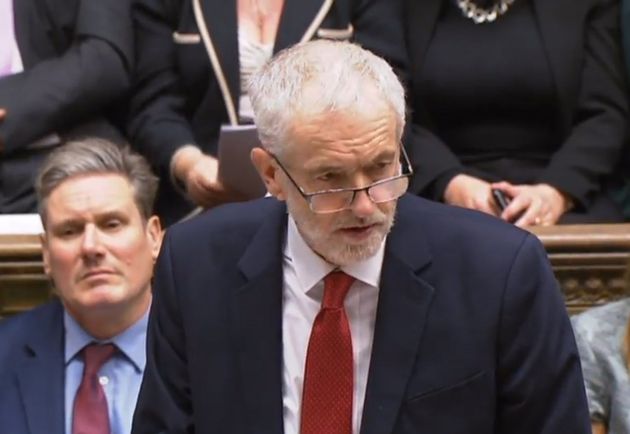


Jeremy Corbyn gets elected to the Leadership of the Labour Party by an extended membership of the Party, and goes for Policies much further to the left than Party was used to.

But most of the Labour MPs in Parliament were NOT chosen by their Party Branch members! During the Leadership of Tony Blair, he had changed the rules, so that the central leadership provided all Party Branches with a list of suitable candidates as MPs - none of whom were remotely Left. He even renamed the Party New Labour!

And, their Blairite MPs were against Corbyn from the start - they did everything they could to remove him, and played a major role in Labour's recent historic defeat. They undermined the shift to the Left at every turn.

The necessary structures of a Real Democracy must support effective leadership, while opposing bureaucratic elites attempting to win power by NON DEMOCRATIC means!

Not easy. But vital. 

26 November, 2018

Socialism?


Rule by the People and for the People?

What about Democracy in the Workplace?


Can we really have Democracy when the workers in a workplace have absolutely no say in what they do there? Should the "bottom line" of profit for an owner totally and always outweigh the needs and interests of the workforce?

It certainly depends upon who owns the business! To make any real change they would surely have to be socially-owned.

Now, of course, the status quo is usually argued-for very differently. For, management insists that only those who now make the decisions are the only ones competent to do so: while the workforce just don't know enough to even be involved. And, when no one is informing the workforce, or even making available the necessary knowledge, that may well be true.

So clearly, as with Political Democracy, so must it also be with so-called Democracy-at-Work! All information must always be made fully available for everybody to be involved to have access and discuss what they are attempting to achieve. And, sufficient resources to overcome any advantage to the privileged, must be fully available to the workforce too.

Currently, the workforce is always totally deprived of such information. But, if full access, along with requisite time, were allocated to such information, the workers, being intimately involved throughout their worktime, will soon learn to handle it, and crucially, with very different objectives to either owners or managers. Indeed, it will amount to a revolution in the efficiency and creativeness of both the work processes and their organisation. How could it be otherwise - the motivations involved will be very different!


Prof. Richard Wolff and his colleagues have written and spoken at length about the need for democracy at work. 


Just compare a Steam Railway Charity run by unpaid, and fully-involved enthusiasts, with the current chaos in our de-nationalised, run-for-profit rail services in Britain today.

What we are talking about, has never been fully achieved anywhere! For, in spite of the clear advantages of Socialised State Planning in Russia and China, after their Revolutions, the workplace was still relatively unchanged from prior Capitalist organisation. For the managers were appointed by the central government. There was NO Democracy-in-the-Workplace!

Clearly, "Socialism" is not what they actually had in those countries, and it was easy for a privileged bureaucracy to emerge, who did not put the working conditions, or the opinions of the workers, high on their agendas at all, and absolutely never delivered any decision making into the hands of the workforce themselves.

Indeed, Democracy-in-the-Workplace would not only transform that institution, but also significantly transform the Working Class involved, because they will, themselves, not only make the crucial decisions in what they are involved with every single day, but they will also discuss and even argue with their workmates, as to what policies the company should be employing. Instead of being excluded from the decision-making that affects their lives, and the wherewithal to make those decisions, they should instead be fully involved in both, and will therefore learn by their successes and their mistakes.

Socialism has to involve real Democracy at every level, in a Society in which Inequality and Privilege have been permanently terminated.


Indeed, the whole approach to the education of the working class, whether they are to be skilled or unskilled, absolutely must transcend mere work-based training and crucially disseminate critical thinking and real Understanding too!

I have worked in every level of Education from Schools, Further Education Colleges and Universities, and even in teaching unemployed youth computer programming, via Youth Training. And, from that wide experience, it soon became clear that the usual separate approaches did not deliver.

13 August, 2018

What to do with Stately Homes?


How can these 'country houses' be made to serve the People?


Currently, the media are overflowing with programmes on the buying and selling of antiques, which always seem to centre around the magnificent palaces of the very rich - either as venues for "Valuation Extravaganzas", or as valuable sources for Antique Dealers, turning unwanted heirlooms into cash, by returning them to those who can both appreciate and afford them!

"Because", we are informed, "these Stately Homes cost absolute fortunes to maintain", you know, "so the hard-pressed owners have grave difficulties in trying to keep their palaces in the state to which they have become accustomed!"


They even have to open their House and Estate to the paying public on special days to help to maintain their required standards.

And, the diverse sub plots, woven into these various celebrations of Grandeur, are purposely included to entrance and con the watchers and the visitors.

"This is what success can deliver for you!"

I lived for a decade within yards of a busy auctioneers, and quickly learned how they fitted in to an overall scheme. On the one hand, they were to extract unrealised treasures from their uninformed owners, at the lowest possible prices, while on the other, the object was to achieve the highest possible prices from those who could afford them, to further boost one "stately" home or another.


These programmes are among the commonest on TV, and even infer that you might be able to even do better than the emerging celebrities, who all seem to appear on a whole range of different offerings, but with the very same purposes.

It has become like the football pools of the past, when it is added to all the above, and to the increasing number of Betting Companies selling their wares over the Internet, the impression is projected that, "the next big winner could be you!"

I'm afraid not.

No.

Its all a necessary myth, so that you come to admire rather than loath the super rich.

But, what a colossal waste!


Such 20, 50 or even 100 room palaces sitting close to so many villages, could become The Property of The People, and be used as Schools, Hospitals, parts of a University, Clinics, Old Peoples' Retirement Homes, Social Centres, Research Centres, and all the rest.

And the Estate Grounds instead of serving a tiny already over-privileged family, could be Public or Country Parks and Sports Venues, or whatever the People need!


13 March, 2015

Inflation in Capitalism


In capitalist societies, the phenomenon of Inflation is unavoidable; indeed, it turns out to be actually essential for the maintenance of the economic system. This is due to the invaluable roles it plays within such a system, based entirely upon borrowed capital to finance the establishment and development of the companies that carry out literally all its transactions.

So, when a loan (or investment) is required, it will usually involve two commitments. Taking a loan will involve the addition of interest to also be paid on as yet outstanding parts of that loan. And secondly the paying back of the borrowed Capital will also be required, usually within a given time period.

NOTE: Investments are somewhat different as the money invested is not paid back, but can be retrieved by selling the investment on the Stock Exchange (maybe at a profit), or if the firm collapses, most, if not all of it, could be lost.

Naturally, with such a risk, the annual dividends paid would therefore be higher.

Now, such pressures upon the system, where the whole development is based upon borrowed money, with additional charges unavoidable, necessarily causes Inflation – the value of the currency is always being devalued to some extent. But, let us consider the effect of such inflation upon the value of the sum borrowed. If every year the value of the currency is decreased by inflation, it means that what is paid back off the borrowed sum will be of less value than it was when borrowed. So, over extended periods paying off the capital becomes less and less in current values, and hence costs the borrower less in real current values to redeem it.

Now, no lender will be happy with such a decline in the money they have lent, so they reduce those effects by limiting the period of time that the loan, or any part of it can be outstanding. They also change the yearly interest charged to offset the decline in value of their loan.

Clearly, the lender must ensure that the terms of the loan, including the rate of interest, balances the books, and guarantees an acceptable profit upon the transaction. So clearly, that rate of interest will not only exceed the rate of inflation, but also will also actually contribute to that rate of inflation itself.

Also, it is always possible that the borrower will default, and the lender will lose some if not all of his loan. So, if there is any doubt about the borrower, the appended yearly interest rate will be upped considerably to protect the lender.

We should also see how bad it is for a borrower in difficulties, for the more problems he encounters, the more interest he will be charged upon subsequent loans, so such a business can be pushed into bankruptcy, while a dominant and flourishing business will be able to borrow money ever more cheaply.

You can certainly see why slumps occur!

Let us now look at all this from the other end – that of a worker in a company. Let us see how inflation affects the wages of such an employee.

Given a fixed wage, inflation will reduce its buying power. It will have the same effect as a cut in wages – hitting the earner, while helping his boss! So, employers borrowing money to finance their business get a “double help” from inflation. It decreases their loans, while also decreasing the real wages of their employees.

Clearly, a worker wanting to maintain the value of his or her wages will require regular wage rises, at least in line with inflation, and often above inflation to increase their cut in the process that they are involved in. The current slump 2008-2015 (so far) has seen no real increase in wages while inflation has been regularly present over almost seven years. The wages of the worker has therefore been regularly cut, while his employer has seen his own owings decline throughout. It is crystal clear who is being made to pay for the crisis, even though it was certainly nothing to do with those workers.


In addition, during that same period, literally millions of reasonably paid full-time jobs have been terminated – mostly in the public sector, and replaced by private sector jobs at lower wages, often involving either part-time working or even zero hours contracts

The whole of the slump is being reversed by getting the necessary wherewithall out of the workers.

But, this has only been possible in the more powerful capitalist states. The weaker ones (as explained above on loans) have been pushed more and more to the wall, by debts and ever-higher interest rates.

The points made here about loans, inflation and interest rates means that those in the deepest holes are forced to pay the highest rates for their necessary loans, and the local bourgeoisie implement the cuts in jobs and wages to try to foot the ever expanding bills. The interest rates being charged to working class families in financial difficulties have now reach phenomenal proportions upon the so call “pay day loans”, and along with fines for late payment, and even bigger hikes in interest rates, they are being impoverished.

Inflation is a necessary cog in the mechanism that is Capitalism, and it is also a cause of such things as slumps, and the means to extract the owners from their slumps, on the backs of the workers.

12 March, 2015

Quantitative Easing – Printing Money


How long can they get away with it?

Recently, on this blog, we have been revealing the essential role of inflation in capitalism, and how remunerative it is to business, both in borrowing money and in paying wages. But, that general principle exists within a context of production. So, something useable and buyable gets produced – value is added to primary resources to deliver more valuable products. So, how does Quantitative Easing fit into the picture?

For Quantitative Easing is merely another name for printing money! And, doing that with absolutely NO real capital to back it: so, absolutely no existing value or created value is involved. It has merely been invented out of nothing. No one lent previously acquired value to finance things. It is just printed out of paper and ink, and expected to be useable as if it was a holder of real value.

So, what was the intention of those who did it, in the midst of a capitalist crisis?

In the 1930s, Public Works were the suggested answer, for though the wages involved were just printed paper; it put unemployed workers back to work, and produced something of value in the process.

But, that is not the case with Quantitative Easing!

Now, by merely printing money and lending it to people at very low interest from actual governments, you would expect to merely debase the currency. But how would that normally show itself? In a global slump, such as the one they are still attempting to extricate themselves from, the relations in value between the currencies will not immediately and generally reflect devaluing actions. Individual countries will exploit any temporary gains, at the expense of other countries, and the Money Markets will deliver confusing indicators of what is going on.

But, the rival nations won’t sit back bemoaning how they are being treated: they will retaliate.

Indeed, having initially refused to follow the Americans and the British, the European Union, has now decided to do likewise. Quantitative Easing is being tried by more and more countries.

The eventual results will not need a genius to predict! An eventual return to real value will cause an avalanche of devaluations. The essential “confidence” in the power of the dominant capitalists will inevitably evaporate!

In the past there has always been another area of the world to exploit, to re-steady the boat, but where are they to turn now?

This crisis occurred when they finally decided to try their usual tricks, but this time directly upon the working classes, via bound-to-fail mortgages to the poor, and the then deceitful repackaging and selling of these, worldwide, as lucrative investments. They expected to reclaim the properties many times as the short-time owners failed to fulfil their financial commitments, but when they tried to foreclose, they found they didn’t have the property: it had been wrecked! The bottom fell out of the whole scheme and the 2008 slump worldwide ensued.


So, who was left to screw? There simply wasn’t anybody! So, a more subtle means had to be both devised and employed.

One effective trick was to keep wages below inflation for FIVE years, which made ordinary workers everywhere pay significantly to help capitalism out of its crisis.

Also, by sacking vast numbers of public service workers, and then hiring them back into privately owned firms, at zero hours contracts, part-time jobs, and even encouraging “black economy” self-employment, the lie of the working class being safeguarded was erected.

But such tricks cannot be said to have worked globally. Indeed, we have been forced back into the rivalry between capitalist states, to get national advantages of one country over another. The anti Russian clamour is part of this (remember Russia is now back in the capitalist fold), but ploughing it’s own furrow in opposition to the old dominators of world capitalism, especially, of course, the USA.

Also, the cheap labour advantages of China and other capitalist or neo-capitalist economies must wane with the demands for appropriate wages in these countries, so the globalisation trick of getting your manufacturing done where labour is cheap cannot be maintained indefinitely, especially as it has also been necessary to impoverish and de-skill the western working classes, sometimes producing echoes of the past with sub-classes even in countries like the USA and the UK.

And the importation of ex-colonial and ex-communist-bloc workers to the West, as a cheap labour alternative to their own indigenous working classes, has led to increasing hostility among the native unemployed, and consequently the immigrants being blamed for the situations in the metropolitan countries. The radical Islamist movement, both in the ex-colonial countries and in immigrant populations is a symptom of the failure of this ploy.

And, there has been another crucial problem.

The middle class investors are getting little or no interest from their savings, and small or even no dividends from their investments, so a major source of investment capital is gradually drying up.

Another way of re-building a source for such investments is by diverting as much profit as possible to the already very rich. So, at the time when the poor are getting poorer, the rich must be made richer, or they too will just sit upon their cash.

Never has the gulf between rich and poor been this big – as 1% of the population now own as much as the other 99%.


But, the dynamics involved in all this are not planned. They are needed in various ways, to constantly re-steady the floundering boat. But, nothing seems to be solving the crisis!

Take the Euro Zone, the UK’s biggest market, it is teetering on the edge of a new deflationary recession once again, and the right-wing Tories and UKIP want to blame the slump on them, and hence want to leave the European Union (while keeping all the trading privileges, of course).

The methods now being used are getting exceptionally desperate.

The economic blockade of Russian capitalism has been stepped up to enormous proportions, and has been possible because of Russia's dependence upon selling Gas and Oil to other countries. But, on top of this, the price of oil has tumbled due to US Fracking and Saudi Arabian full-throttle selling, and these, along with the World Crisis have caused there to be more oil than is needed to be bought.

You can see that this is still a major crisis, with no end in sight.

So, what will Quantitative Easing do in the long term? The Americans have got away with it because of their dominance in world trade, while the UK also managed to employ it, because of their dominance in world finance.

But now the Europeans are about to try it too.

If it becomes universally applied, any advantages so far seen will vanish for everybody

Printing money on a global scale can only have one outcome. The value of all currencies will tumble – shown not in exchange rates, but in roaring inflation.

The crisis will get worse.

22 January, 2013

Why Socialism XII: Into the Dragons' Den

Dragons Den

The Entrepreneurs
The Conservative Party, aided and abetted by their Liberal Democrat partners in the present Coalition Government in the UK, and even echoed by the opposition Labour Party, agree that the motive force of Capitalism resides with the Entrepreneurs, and behind them, the Moneyed Class.

They point to the developments of the last few hundred years as being totally due to these Drivers and Developers of our Society, and without whom, we would still be languishing on the land, scraping out a meager living, and remaining in rural ignorance.

But as with all those at-the-top, they leave out all those who actually do the work, and even the inventors, scientists, technologists and engineers, who made possible the profitable undertakings that made them rich.

And such omissions are not only reprehensible, but mask the real wealth-making in our Society, and get away with their version, because they most certainly are the principal recipients of that wealth.

These same people, if pressed to name the most significant period in History, will almost to a man name Greek Society of over 2000 years ago, and will give you innumerable advances that can be put down to that civilization.

But they fail to mention that it was a Slave-Owning Society, in which captives taken in battle, or merely by force from their homes, became the property of the conquerors, and made to work without pay, possessions or rights to the benefit of their now owners. But this isn’t a modern moral judgement of the past: that was the way of things then. But it does throw a different light on why they were able to achieve what they did.

Such a society would, and indeed did, release the “citizens of the State” from most of the onerous labour, so that they could commit themselves to Mathematics or Philosophy or anything else that they chose to pursue, and still live in the marvellous conditions to which they had become accustomed.
Dawn to Dusk hard labour, and without any money or facilities is not conducive to such studies, so for the slaves such things would never even get on the agenda.
[Where has that occurred since, I wonder?]

And the present day Entrepreneurs are in a similar position, but dedicate themselves to a much lower objective – to get as rich as they possibly can, by the exploitation of other people’s ideas, and the labour of the workers employed to deliver-the-goods.

I, therefore, feel that I have to strongly disagree with these surveyors from on high, and insist that a Society only composed of such predatory parasites as these, would soon either die or retrench back to Kingdom of the strongest over the weakest, and an enforced, if wholly inadequate class of their oft-times colleagues, now reduced to working for their “betters”

NO, these parasites do nor direct progress; they merely misappropriate the invention and work of others. Indeed, in many ways, they are so conservative that they present a very strong barrier against such innovators even getting started.

The famous Dragons’ Den TV programme on BBC in the UK, though a supposed entertainment, does very clearly illustrate what motivates these funders of new enterprise. They certainly consider their wealth will have to be increased by becoming involved, and no other criteria are really considered.

For they can only use how they became top dogs to judge the abilities of newcomers to do likewise, and then only help if it gives themselves even more wealth and status as a consequence.

It is like a History composed entirely of Kings and Queens. You would think that History was made exclusively by these people. But, though they did sit on top and make decisions they did not make the crops grow, or invent new products, develop Mankind’s understanding of Reality, and certainly didn’t make anything. They were the Ruling Class, and they kept their positions by the actions of bodies of armed men – such as the police and the army. They could even win an entire country by invasion, as did William the Conqueror, or even build a worldwide Empire like the British.

NO, that isn’t History as an explanation, but merely as an after-the-event description. The real historians do not merely concentrate upon the top parasitic, coercive class.

Michelet’s History of the French Revolution delivered the impulse of the changing situation via the minutia of everyday happenings in the whirlpool of a Revolution.

V. Gordon Childe delivered History via archaeological findings as he described in What Happened in History and Man Makes Himself.

So. Let us be clear. The Dragons are not the motive forces of Society. They are products of the capitalist appropriation of processes and functions that are forever the actions of a developing populace. Indeed, in many ways the Dragons are the barriers to real Qualitative Changes, and they will have to be totally impoverished, and swept away in a Society, which will prohibit such a powerful and totally self-serving caste.

20 December, 2012

Why Socialism X: Socialised Capital I

soviet banknote lenin

Funding Development
Now, once the Capitalist System is no more, the usual way of getting the necessary financial resources for setting up any sort of new business, commissioning any necessary external services, or subsequent re-tooling, will require alternative means.

And it will no longer be the DeLorean Model of acquiring state funding to deliver “sorely-needed jobs” in a depressed area, only to dupe ill-informed politicians, and, in effect, enlarge their own increasing wealth with far from communal motives - such will no longer be allowed to happen.

The question must be, “What must these alternative methods be, and how will their sources both acquire their financial resources and deliver required funding?”

Clearly, from the outset, personal profit will be excluded as a motive.

With Service as the driving force, the usual bids will be suggestions for improving or extending what already exists, and the usual sequences will probably involve funding for some sort of pilot schemes. Thus, very different imperatives will drive that system, more like developments in Hospitals, the Fire Service or the Co-op (CWS) than in the capitalist environment with short-termism and money motives.

Now, clearly, the wherewithall for doing this in Capitalism is the wealth in the hands of private individuals and banks.

But, even they had to start from somewhere.

It was partly to address these present questions that the first paper in this series was the one about Primitive Accumulation that had been necessary before Capitalism had really taken off.

The main way then was the universally applied “robbery-with-violence" (or War as it is sometimes called)

Now though production of food and commodities for sale had been around for millennia, it only rarely concentrated vast amounts of wealth into few hands. So, war was decidedly better at achieving this concentration.

The rewards for victory in those methods were booty and land, and thus great empires were erected upon this means alone.

Now clearly, a new socialist state cannot use the same methods, but to keep industry and commerce working, it can, and must, take back into the possession of the people all the wealth amassed by entrepreneurs, capitalists and thieves of various kinds. All wealth would have to be confiscated and become the resources for the new state and its people.

All Banks and Corporations would be nationalised without compensation for the same reasons, and where individuals or groups decided to run off with their ill-gotten gains, they would be pursued by revolutionary armed forces to free that booty and return it for the benefit of all.

In addition, all firms would be re-organised to be under Worker’s Control, but with a commitment to both their local Community and to the State via taxes, policies and Revolutionary Law, though these would be very different from a Capitalist Regime, where after having paid Income Tax, National Insurance, VAT on most purchases and many other taxes and fees, the proportion of earnings left to be used in whatever way the workers and their families thought fit was, and is, derisory.

There will be, of course, mammoth opposition from the privileged layers of the old regime, who though their power was not necessarily extensive, could live very comfortable lives, and that would no longer be guaranteed by the well-tried methods of ancestors accruing sufficient wealth to ensure it by whatever means available.

The Theme would certainly be Service and Reward, rather than personal Success and Wealth.

So those well used to such things will certainly fight to bring the new State to its knees. [14 capitalist nations invaded Russia after the successful revolution in 1917 with the intention of destroying the new Socialist state and returning it to its previous owners (or perhaps themselves?)].

But, nevertheless, without the multiple layers of profit taken and the Principle of Serving the Community, many things would begin to be achieved. Sufficient houses of sound quality would be built to ensure everyone a home.

Landlords would be no more!

All such functions would not be for profit, but for need, and though the old capitalists will fight to their last breaths to regain their wealth, they will not succeed. Because this time it will not be one isolated revolution surrounded by hostile and powerful enemy states, but the famed “Domino Effect”.

As with the Arab Spring of 2011, one country after another will topple their rulers, and will co-operate with each other NOT, of course, like the UK, France and the USA who “co-operated” with the Libyan rebels, merely to get a piece of the Oil, but as equal partners for mutual good of their peoples.

Now, when managers are running a company on behalf of investors, they must feed the voracious appetite of those people as their prime necessity. So, all possible means are used to maximise profit, and these are only very rarely reflected in increased wages to those workers employed in that company.

My stepfather was regularly sacked when he demanded a better deal for his Foundry Gang, and just as regularly re-employed because his superiors could neither do what he was able to do, nor find anyone else to do it for them.

Nevertheless, his position was unique, and almost all workers just had to keep stum or be kicked out. Indeed, even the defensive organisations of the Working Class were considered by owners to be the main enemy, and in certain eras, such as in the 1980s in the UK, a Tory Government was willing to shut down vast tracts of manufacturing and mining to destroy the most effective Trades Unions. 

So, the question arises, “What will the imperatives be in organisations now owned by the People at large?” No voracious investors wishing to keep (or even inflate) their very comfortable lives, so what would be the incentives and rewards under this new system? Who would get them, and on whose judgment?